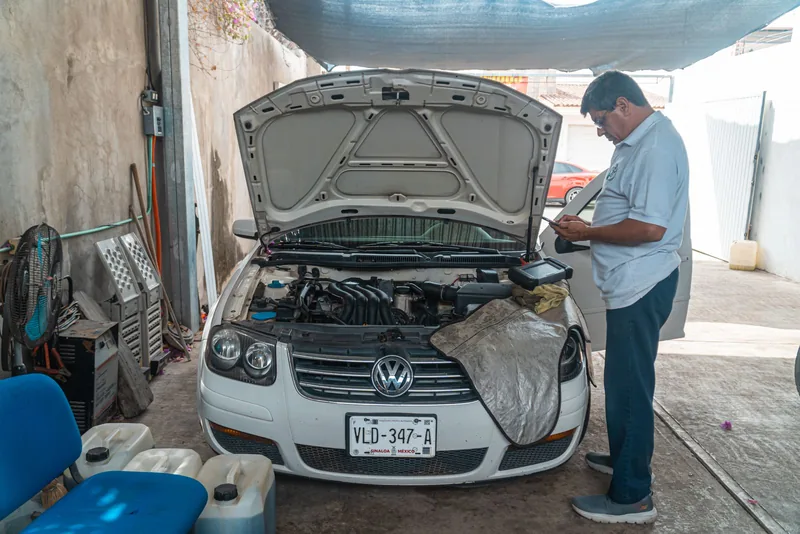
- An estimate has to convince someone who knows nothing about cars and, at the same time, put in writing what will and won't be done.
- Labor and parts go on separate lines.
- Optional work is marked as not urgent and kept apart, so the customer can approve what's needed without feeling that the rest is being pushed on them.
- Speed and follow-up weigh almost as much as price, because many people never say no. They just stop replying.
A customer asks for a price on a noise in the suspension and you send back a message with a total. That's it. Two days later there's no reply, and when you finally call, they tell you another shop quoted less, although that shop probably quoted for something different and your message gave them no way of comparing.
An auto repair estimate has two jobs. One is commercial, convincing someone who doesn't know cars that the price is fair, and the other is protection, because it puts in writing what will be done and what won't, which heads off the argument on pickup day. A line that just says front suspension repair does neither.
In some places it's also the law. In California, for example, the Automotive Repair Act requires a written estimate and the customer's authorization before work starts, and again before any additional work. Check what applies where you work.
What every estimate needs
In the order the customer looks for them.
- The shop and the estimate number. Your trading name and any registration or tax number your country expects to see on it, plus a way to contact you and the estimate number itself, so the customer can quote it when they write back.
- The customer and the vehicle. Note the customer's name and phone along with the details that identify the car beyond doubt, including the mileage and, if you can, the VIN, which stops you ordering the wrong part for models that come in several versions.
- What the customer asked for, in their own words. “Clunks over speed bumps” is not the same as “replace shocks”.
- The diagnosis. What you found and how you confirmed it.
- Labor, line by line with hours and rate, or with the price of each job if you charge flat-rate.
- Parts, each one listed with its quantity and price, saying whether it's OEM or aftermarket, since that's the part customers compare most with other shops.
- Shop supplies and other charges if you bill them separately.
- Tax shown on its own line, under the name it has where you are.
- How long it's valid, in days, because parts prices change from one week to the next and you can't hold a figure forever while the customer makes up their mind.
- Estimated completion time and payment terms, including any deposit you ask for.
- The warranty you give on your work, if you give one, in writing and without promising what you won't deliver.
- A space to approve it with a date, which can be a signature or a button.
A sample estimate
Here's how the core of the estimate for that suspension noise might look, with example prices in a generic currency and before tax, so you can see how each item is split out and where the work the customer can leave for later goes.
| Item | Type | Qty | Price | Amount |
|---|---|---|---|---|
| Front suspension diagnosis (road test and on the lift) | Labor | 0.5 h | 110 | 55 |
| Replace front shock absorbers | Labor | 1.8 h | 110 | 198 |
| Front shock absorber, aftermarket brand | Part | 2 | 145 | 290 |
| Bump stop and dust boot kit | Part | 2 | 28 | 56 |
| Wheel alignment | Labor | 1 | 95 | 95 |
| Optional, not urgent. Sway bar bushings with visible wear | Parts and labor | 1 | 85 | 85 |
| Total without optional work | 694 | |||
| Total with optional work | 779 |
Two details in this sample are worth more than the layout. The optional work sits apart and is marked as not urgent, so the customer can approve what's needed without feeling the rest is being slipped in, and quite often they come back a few months later for what they left pending because they already knew it was there. The diagnosis has its own line. That way the customer understands that half hour is work, even if they end up not going ahead with the repair.
The estimate is not the work order
The estimate is a proposal the customer can still turn down, while the work order opens once they approve it and is what the tech uses in the bay to know what to do and with which parts. Mixing both on one sheet works until the day the customer approves only part of it, and then nobody knows for sure what was authorized. It happens a lot. If your system keeps the approved estimate exactly as the customer saw it, along with the time they approved it, any later argument is settled by looking at the screen.
What gets estimates approved
Speed, before anything else. An estimate sent the same day competes with far fewer alternatives than one that arrives three days later, when the customer has already called two other shops and has a figure in their head to compare yours against. Templates for common jobs help.
Explain every line. Customers struggle to pay for a “timing belt kit” when they don't know what it is or why it gets replaced at a certain mileage even though it hasn't failed. One plain-language sentence per line saves a lot of calls asking what this one is.
Show the evidence. A photo of the worn pad convinces more than any text, and if something new turns up with the car apart, ask for approval with that photo or a short video before you touch it, never after, because work done without permission always gets argued about at pickup.
Follow up. A friendly reminder after two or three days, and another before the estimate expires, wins back jobs you'd written off, because the customer simply forgot or never found the moment to reply. It isn't pestering. It's reminding a busy person they have something pending.
How it works in Promec
In Promec each line of the estimate carries its own expandable explanation, and the customer approves it with one tap or with their signature from their phone. The system tells you when someone opened it and didn't reply, so you can call while they still remember your price, and on the Premium plan the follow-ups go out on their own through whichever channel each customer uses. Additional work is approved from a video recorded by the tech, and the approval stays in the estimate's history with its date, which is what you'll want to show if there's ever any doubt. To get the labor right from the start, read how to calculate your shop labor rate first, and if the car is already in the shop, the vehicle check-in inspection is what comes before the estimate.
On a call, we'll show you how one of your estimates looks in Promec, with an explanation on every line and approval from the customer's phone.
Show me →Frequently asked questions
How many days should an auto repair estimate be valid?
Keep it short. One or two weeks is reasonable, because parts prices change, and where inflation is high it's worth shortening it further or stating in writing that parts prices are confirmed at the moment the customer approves.
Can I charge for writing an estimate?
For the diagnosis, yes. You can charge for whatever you need to do before you can price the job, as long as you say so up front. Charging to write down the price of an oil change, on the other hand, drives customers away.
What if another fault turns up once the car is apart?
Stop. Document it with a photo or a video and ask for written approval before you carry on, because unauthorized work is the most common source of arguments at pickup.
Is it better to send it as a PDF or as a link?
A PDF works as a record. A link lets you see whether the customer opened it and lets them approve it on the spot. They can also view photos or videos without downloading anything, so ideally you have both.